Rent or Buy in Nephi · Ownership · Flexibility · Space · True Housing Cost
Townhouse vs Apartment in Nephi: Which Fits Your Life?
A townhouse and an apartment can both provide a modern Nephi home, but they solve different problems. This guide compares the upfront cash, complete monthly cost, space, maintenance, privacy, pets, parking, equity potential, transaction risk, and timeline—without assuming that buying or renting always wins.
By The Priority Homes Team · Townhouse guidance by Kerry Anderson · Apartment information by Chantel Bennett
Rebuilt July 17, 2026 · Prices subject to change · ~14 min read
Comparison standard: the townhouse example uses the live Loveless Estates listing at $389,900. Apartment examples use published Priority Homes rents from $1,300 to $2,200. Mortgage rates, loan costs, taxes, insurance, HOA terms, rent, utilities, repairs, appreciation, and selling outcomes must be verified for the reader's actual situation.
The decision in one sentence
Rent when flexibility and lower upfront exposure matter more; buy when long-term control and ownership fit your finances and timeline.
An apartment is usually the simpler short-term commitment. It requires less cash at move-in, transfers most building maintenance to management, and allows a household to leave at the end of the lease.
A townhouse can provide more control, space, privacy, garage and yard utility, and equity potential. It also exposes the owner to financing, closing costs, repairs, HOA obligations, market changes, and future selling costs. The winner is determined by your real numbers—not a universal five-year promise.
The financial and legal relationship matters more than the building label.
In this comparison, the townhouse buyer purchases a specific home, obtains title, finances or pays cash, carries owner insurance, pays property taxes and HOA dues, maintains the owner-responsible portions, and later controls the decision to sell. The apartment resident signs a lease, pays rent and required tenant charges, follows the lease and community rules, and returns possession when the tenancy ends.
Decision factor
Townhouse owner
Apartment renter
Legal position
Owns the property interest defined by title and HOA documents
Receives the right to occupy under the lease
Upfront commitment
Down payment, closing costs, lender expenses, inspections, moving, and reserves
Application charges, deposit, first rent, pet charges, utility setup, and moving
Monthly payment
Mortgage if financed, taxes, insurance, HOA, utilities, maintenance, and reserves
Rent, renter's insurance, utilities, pet rent, and any lease-authorized charges
Maintenance
Owner handles interiors and all items not assigned to the HOA
Manager or owner handles landlord obligations; renter handles tenant duties
Control
More freedom, subject to law, lender, structure, warranty, and HOA rules
Changes, pets, occupancy, and use are limited by the lease and policies
Exit
Must sell, retain, or legally rent the property; value and timing are uncertain
Can usually leave when the lease ends after satisfying notice and move-out terms
Financial outcome
May gain or lose equity depending on principal reduction, value, costs, and sale
No ownership equity, but retains capital not committed to the purchase
A townhouse is not automatically legally owned “with the land,” and an apartment is not always a hallway-style building.
Townhouse describes a physical housing form; apartment often describes a rental use. Title, plat, declaration, lease, and governing documents establish the legal rights and responsibilities.
Current Priority Homes Nephi examples
Use real local options, but verify each one before making a comparison.
Ownership example · Loveless Estates
233 W 815 N #53
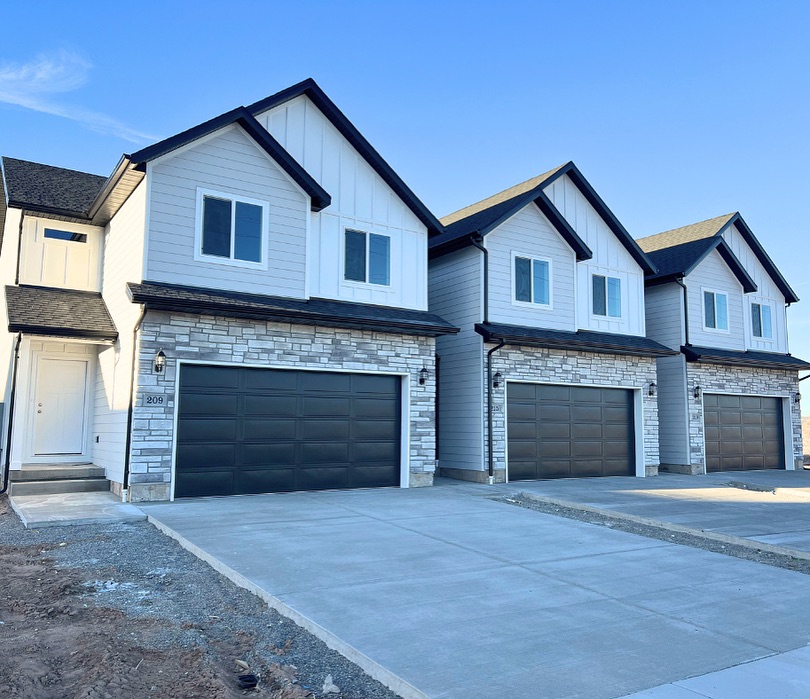
The featured live listing was shown at $389,900 on July 17, 2026. It reports three bedrooms and approximately 2,579 total square feet, with an attached garage, modern kitchen, multiple living areas, and a fenced backyard. Finished square footage and exact specifications must be confirmed.
Published apartment pricing ranges from $1,300 to $2,200 per month. Ray's offers 2- and 3-bedroom options. Loveless offers 2-, 3-, and 4-bedroom options. Availability and the actual lease control the decision.
Open unit, lease start, deposit, utilities, pets, parking, and exact condition
Loveless Apartments
2BR $1,550; 3BR $1,750; 4BR $2,200
2–4
Open unit, floor plan, lease, utilities, pets, parking, and actual finishes
Loveless Estates #53
$389,900 purchase example
3
Live price, loan, completed area, HOA, taxes, insurance, incentives, and closing costs
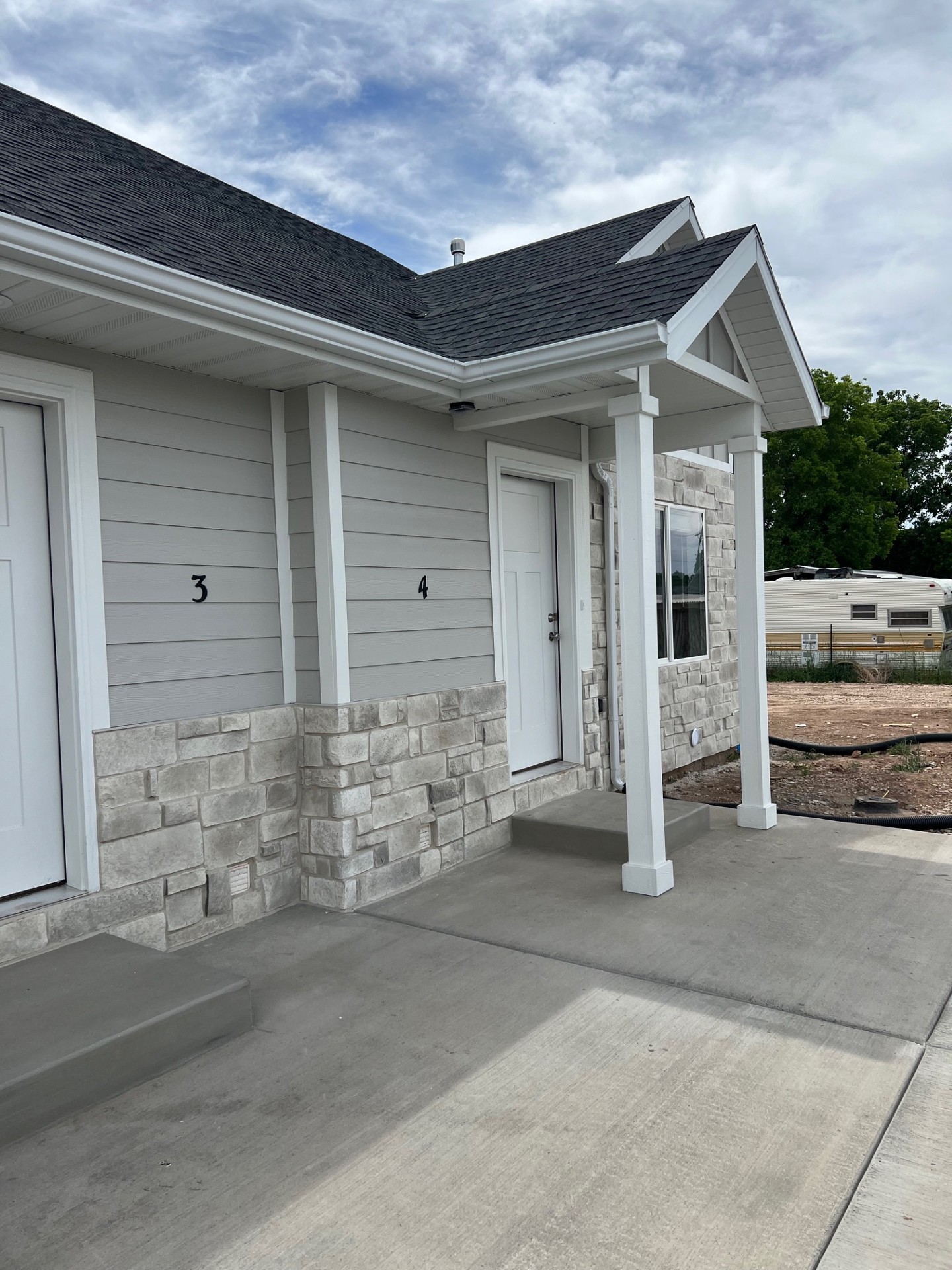
Priority Homes apartment entry. An apartment can still provide a private exterior entrance and residential appearance. The meaningful comparison is the lease, monthly cost, maintenance allocation, parking, space, and flexibility—not an assumption that every apartment uses shared interior hallways.
Upfront cash: the first major divide
Buying usually requires much more cash before move-in, even when the monthly payment appears manageable.
A renter generally needs the move-in amounts required by the lease. A buyer must prepare for the down payment plus costs that do not become equity: lender and title charges, appraisal, inspections, prepaid taxes and insurance, moving, immediate purchases, and post-closing reserves. Seller or lender concessions may reduce some items, but they should be confirmed in writing rather than assumed.
Upfront category
Townhouse purchase
Apartment lease
Primary payment
Down payment selected with the lender
First month's rent or prorated rent
Transaction expenses
Loan, appraisal, title, settlement, recording, inspection, and prepaid costs
Application, screening, administrative, or lease charges where permitted
Deposit
Earnest money may be credited at closing; reserves remain important
Security deposit and any pet deposit or other lease-authorized deposit
Immediate purchases
Furniture, window coverings, tools, maintenance supplies, and any excluded appliances
Furniture, household items, and any renter-provided equipment
Recommended liquidity
Cash remaining after closing for repairs, deductibles, HOA issues, and personal emergencies
Emergency fund for rent, moving, vehicle, employment, and personal disruptions
Illustrative down-payment amounts on $389,900
Illustrative percentage
Down-payment amount
What this does not include
3.5%
$13,646.50
Eligibility, mortgage insurance, closing costs, reserves, and lender requirements
5%
$19,495
Closing costs, prepaid items, mortgage insurance, moving, and reserves
10%
$38,990
Closing costs, prepaid items, inspection, and reserves
20%
$77,980
Closing costs, prepaid items, inspection, moving, and reserves
These percentages are math examples—not loan-program promises.
Eligibility, minimum investment, mortgage insurance, rates, points, reserves, seller concessions, occupancy rules, and closing costs depend on the borrower, property, lender, and current program.
Compare the complete monthly housing cost
Mortgage principal and interest versus rent is not a complete comparison.
Monthly item
Townhouse amount
Apartment amount
Evidence
Principal and interest / rent
$________
$________
Written lender quote or actual lease
Property tax
$________
Included in landlord's ownership cost
Current tax record and lender estimate
Owner or renter insurance
$________
$________
Property-specific and renter-policy quotes
HOA
$________
Not separately paid unless the lease states otherwise
Current HOA statement and documents
Mortgage insurance
$________
Not applicable
Lender quote
Utilities
$________
$________
Responsibility matrix and recent usage
Interior maintenance
$________
Tenant duties only; landlord obligations per lease and law
Owner reserve or lease
Capital reserve
$________
Not a renter ownership expense
Property age, systems, warranties, and reserve policy
Pet charges
HOA and owner costs as applicable
$________
HOA rules or lease
Total monthly housing cost
$________
$________
Compare using the same month and household
Principal is not a normal operating expense—but it is still cash leaving the household.
A portion of a mortgage payment may reduce the loan balance and increase equity. That equity is not immediately spendable without a sale or additional borrowing, and it can be offset by falling value, transaction costs, or property expenses.
Costs that are often omitted from the ownership side
Loan points, origination, appraisal, title, settlement, recording, and prepaid amounts
Inspection and specialist evaluations
HOA dues, increases, insurance deductibles, and potential assessments
Interior repairs, appliance replacement, plumbing, electrical, HVAC, and owner-responsible components
Moving twice if the ownership period is short
Future listing preparation, brokerage, title, concessions, repairs, and other selling costs
Opportunity cost of the down payment and reserves
Costs that are often omitted from the rental side
Renter's insurance and tenant-paid utilities
Pet deposit, pet rent, and pet-related damage
Application, screening, or lease charges where permitted
Renewal increases or the cost of moving if the home is no longer available
Limited ability to customize the home
No ownership interest created by the rent payments
Equity, appreciation, and tax benefits
Ownership can build wealth, but the outcome should be modeled—not declared.
Townhouse ownership can create equity through loan principal reduction and changes in market value. The owner may also benefit from certain tax treatment if the current law and individual tax situation allow it. None of these outcomes should be treated as guaranteed monthly discounts.
More predictable component
Principal reduction
An amortizing mortgage generally reduces the balance as scheduled payments are made. The exact first-year amount depends on the loan amount, rate, term, payment history, and loan structure.
Uncertain component
Market appreciation
The property may rise, remain flat, or decline. A forecasted percentage should be shown as a scenario—not deducted from current housing cost as though already earned.
Tax-specific component
Possible tax treatment
Mortgage-interest and other tax effects depend on law, itemization, debt limits, property use, and the taxpayer. Use a CPA or qualified adviser rather than a generic bracket assumption.
Do not publish “the owner is $47,000 ahead after five years” as a fact.
That conclusion depends on appreciation, financing, repairs, HOA costs, tax treatment, opportunity cost, rent changes, selling expenses, and the exact sale date. Present a range of scenarios instead.
Five-year outcome worksheet
Five-year item
Townhouse scenario
Apartment scenario
Total monthly housing payments
$________
$________
Upfront transaction and move-in costs
$________
$________
Maintenance, repairs, and reserves
$________
Tenant-paid duties and damages: $________
Principal reduction
$________
$0 ownership equity
Estimated sale value
Downside / base / upside
Not applicable
Estimated selling and exit costs
$________
Lease-end and moving costs: $________
Investment return on uncommitted renter capital
Opportunity cost: $________
Actual return if invested: $________
Net five-year position
$________
$________
Space, privacy, parking, and outdoor life
The townhouse premium may purchase daily utility—not merely an ownership label.
Lifestyle factor
Loveless Estates example
Priority Homes apartment
Verify
Square footage
2,579 total square feet; finished and unfinished categories must be confirmed
Varies by bedroom count and exact unit
Measure usable rooms and compare finished-to-finished area
Levels
Multi-level living with stairs and basement potential
Layout varies; may provide easier single-level daily living
Accessibility, furniture, children, pets, and long-term mobility
Entry
Private front entrance
The supplied apartment image shows private exterior entries
Exact unit access, stairs, lighting, security, and deliveries
Shared walls
Attached-home walls; no unit above or below in the typical plan
Depends on apartment layout and building configuration
Visit during occupied hours and ask about noise policies
Garage and storage
Attached garage plus basement and interior storage potential
Published dedicated parking; storage varies
Vehicle dimensions, guest parking, trailers, and storage rules
Outdoor space
Featured listing includes a fenced backyard with grass and sprinklers
Private or common exterior areas vary by unit
Maintenance, pets, gates, irrigation, sun, and actual dimensions
Customization
Greater interior control, subject to structure, code, warranty, and HOA
Changes require lease and management approval
Painting, fixtures, shelving, television mounting, and exterior changes
Use finished space correctly.
Loveless Estates is commonly marketed with approximately 1,800 finished square feet plus basement potential. Many Santaquin-area townhomes are closer to roughly 1,500 finished square feet. Compare finished-to-finished first and then value the basement separately.
Maintenance, control, and responsibility
Renting transfers more responsibility; ownership provides more control and more exposure.
Townhouse ownership
You control more—and must budget more
The owner handles the interior and every item not assigned to the HOA. That may include appliances, plumbing within the unit, electrical components, flooring, paint, fixtures, HVAC responsibilities, deductibles, and damage. The current HOA documents control the exterior boundary.
The lease assigns tenant duties and explains how maintenance requests are submitted. Renters are still responsible for cleanliness, prompt reporting, ordinary care, damage caused by occupants or guests, utilities assigned by the lease, and access for lawful repairs.
Which roof, siding, windows, doors, fencing, driveway, landscaping, and utility items belong to the owner or HOA?
What is the current HOA fee, reserve position, insurance boundary, and assessment history?
What builder, appliance, systems, and structural warranties apply?
How much cash should remain after closing for maintenance and deductibles?
Questions for the apartment tour
What does the rent include, and which utilities are tenant-paid?
What are the deposit, pet, parking, notice, renewal, and move-out terms?
How are routine and emergency maintenance requests handled?
Which pictured unit will be leased, and what is its current condition?
Timeline, market risk, and flexibility
Your expected length of stay can change the answer more than any single monthly figure.
Short or uncertain stay
Renting often fits when employment, family, location, income, school, or relationship plans may change soon. Model lease obligations and moving costs.
Expected medium stay
Compare both paths carefully. Buying may work, but purchase and selling costs can matter heavily if the home must be sold sooner than planned.
Long and stable stay
Ownership has more time to spread transaction costs and reduce principal, but the buyer must still afford repairs, HOA, insurance, and market fluctuations.
Model three ownership exit dates
Scenario
Reason
Inputs to model
Earlier-than-planned sale
Job, family, health, payment stress, or location change
Flat or lower value, full selling costs, repairs, concessions, and slower marketing
Expected sale
The household follows its current plan
Conservative value range, realistic selling cost, remaining loan, and maintenance
Long hold
The home remains useful for many years
Repairs, replacements, HOA changes, refinance risk, opportunity cost, and long-term fit
There is no universal “five years minimum.”
A longer stay generally improves the chance to spread transaction costs, but a favorable or unfavorable market can change the result. Use your actual loan and realistic exit assumptions.
Choose the option that fits today
A good apartment decision can be better than a premature purchase; a sound purchase can be better than indefinite renting.
Townhouse may fit when
You are ready for ownership
Your income and employment are reasonably stable.
You can close without exhausting emergency reserves.
The complete monthly cost is comfortable—not merely lender-approved.
You expect the home and location to remain useful.
You value the garage, yard, storage, control, and space.
You accept HOA, maintenance, market, and transaction risks.
You have reviewed the inspection, title, HOA, insurance, and loan.
Do not buy simply because “rent is throwing money away.”
Renting purchases housing, maintenance allocation, and flexibility. Do not rent indefinitely merely because ownership feels complicated either. Compare the complete value each path provides during the period you realistically expect to use it.
The apartment-to-townhouse transition plan
Renting first can be a deliberate ownership strategy rather than a financial failure.
Phase 1
Choose a manageable apartment
Select the bedroom count and rent that preserve monthly savings rather than stretching to the maximum available unit.
Phase 2
Build reserves first
Create emergency savings before separating money for a down payment, closing, moving, and post-closing repairs.
Phase 3
Improve the borrowing file
Pay on time, reduce costly debt, avoid unnecessary new obligations, and correct credit-report errors.
Phase 4
Test Nephi daily life
Learn the commute, schools, healthcare, errands, seasons, neighborhood patterns, and which location fits.
Phase 5
Request real purchase numbers
Use a written lender quote, exact property, taxes, insurance, HOA, inspection, and comfortable reserve target.
Phase 6
Buy only when ready
Move when the home, payment, cash position, timeline, and ownership responsibilities all fit—not merely when a lease ends.
Compare both paths with the right local contact
For a townhouse, bring your price range, financing status, move date, space requirements, and HOA questions. For an apartment, bring your bedroom count, move date, pet status, budget, and preferred community.
Balanced answers for renters and prospective buyers in Nephi.
What is the main difference between a townhouse and an apartment?
For this guide, the townhouse is purchased and owned, while the apartment is occupied under a lease. That changes the upfront cash, maintenance, control, risk, potential equity, and exit process.
Is it cheaper to rent or buy in Nephi?
Renting generally needs less upfront cash and may have a lower predictable monthly cost. Buying can build equity but adds loan costs, taxes, insurance, HOA dues, maintenance, reserves, and future selling costs. Compare the actual lease with a complete written purchase estimate.
What apartment rents are used in the comparison?
Published Priority Homes pricing ranges from $1,300 to $2,200 per month: Ray's 2BR at $1,300 and 3BR at $1,450; Loveless 2BR at $1,550, 3BR at $1,750, and 4BR at $2,200. Call Chantel for current availability and lease terms.
What townhouse price is used?
The current Loveless Estates example is 233 W 815 N #53, MLS #2142576, shown at $389,900 on July 17, 2026. Confirm its live status and all specifications before using it in a financial comparison.
Does the townhouse have more space?
The featured listing reports 2,579 total square feet, but finished and unfinished space must be separated. Priority Homes commonly describes approximately 1,800 finished square feet plus basement potential. Apartment size varies by exact unit.
Does buying always create wealth?
No. Principal reduction may build equity, but market value can rise or fall. Repairs, HOA costs, loan expenses, selling costs, and a short ownership period can reduce or eliminate a gain.
Can I subtract a mortgage tax deduction from the monthly cost?
Only after qualified tax advice. The IRS rules depend on the debt, property, use, limits, and whether the taxpayer itemizes. Not every homeowner receives an incremental tax benefit.
How long should I stay before buying?
There is no universal cutoff. Model an early sale, expected sale, and long hold using the actual loan, maintenance, value scenarios, and complete selling costs. A short or uncertain stay often favors renting.
Can I have pets in either option?
Townhouse owners remain subject to HOA, insurance, local-law, and nuisance rules. Apartment residents follow the lease and pet policy. Priority Homes' current apartment pages publish pet approval requirements and charges that should be confirmed before applying.
Who do I call?
Call Kerry Anderson at (435) 660-0264 for townhouses. Call Chantel Bennett at (435) 660-1332 for apartment availability.
Sources, definitions, and comparison method
Townhouse example: the Loveless Estates guide and live listing for MLS #2142576 provide the $389,900 current example, address, three-bedroom count, 2,579 total square feet, garage, yard, finishes, and verification notes.
Apartment examples: the rebuilt Priority Homes Apartments hub publishes Ray's and Loveless bedroom pricing from $1,300 to $2,200 and directs renters to confirm actual availability with Chantel Bennett.
Tax treatment: IRS Publication 936 explains mortgage-interest qualification and limits. A generic assumed tax bracket is not a reliable ownership-cost adjustment. Source: IRS Publication 936.
Townhouse and apartment labels do not alone establish title, maintenance, insurance, parking, pet, or occupancy rights. Use the current title, HOA documents, purchase contract, lease, and insurance policies.
The page intentionally does not publish one mortgage payment or a guaranteed five-year winner because rates, loan terms, costs, value, repairs, tax treatment, and timelines differ.
Housing and financing information is educational and is not a loan approval, appraisal, tax opinion, legal opinion, or guarantee of value or savings.
Update trigger: revise the featured price, rent table, HOA reference, and contacts whenever the underlying Loveless Estates listing or apartment pricing changes.
Tour a Loveless Estates townhouse and a current Priority Homes apartment. Then compare the real space, parking, privacy, maintenance, complete monthly cost, upfront cash, commute, and timeline before choosing.
When deciding between a townhouse and an apartment, understanding the cost implications is crucial. Townhouses typically require a larger upfront investment due to the purchase price, while apartments often involve lower initial costs through rental agreements. This financial distinction can significantly influence your choice based on your current financial situation and future plans.
In addition to purchase or rental costs, consider ongoing expenses such as homeowners association (HOA) fees for townhouses, which cover maintenance of shared spaces, versus the more predictable costs associated with renting an apartment. Evaluating these factors will help you make a more informed decision that aligns with your budget and lifestyle goals.
Community and Lifestyle: Choosing the Right Environment
The community aspect can greatly affect your living experience in either a townhouse or an apartment. Townhouses often provide a sense of community with neighbors who may have similar ownership goals, fostering long-term relationships. This can be particularly appealing for families or individuals looking for stability and a neighborhood feel.
On the other hand, apartments usually attract a more transient population, which can lead to a diverse community but may lack the long-term connections found in townhouse living. Understanding the social dynamics and lifestyle preferences associated with each option can guide you in selecting the environment that best suits your needs.
Future Investment Potential: Equity and Resale Value
One of the most significant advantages of owning a townhouse is the potential for building equity over time. As property values increase, homeowners can benefit from appreciation, making townhouses a potentially lucrative long-term investment. This aspect is particularly appealing for buyers looking to secure their financial future through real estate.
In contrast, apartments do not offer equity since they are rented rather than owned. While they may provide short-term flexibility, they do not contribute to long-term wealth building. Assessing your financial goals and whether you are looking for a temporary living situation or a long-term investment can help clarify which option is best for you.
Maintenance Responsibilities: What to Expect
Maintenance responsibilities differ significantly between townhouses and apartments, impacting your overall living experience. Townhouse owners are typically responsible for both interior and exterior upkeep, which can include yard work and repairs. While this provides a sense of autonomy and control over your living space, it also requires a commitment to regular maintenance tasks.
In contrast, apartment living usually involves less personal responsibility for maintenance, as property management often handles repairs and upkeep. This can be a major advantage for renters seeking convenience and minimal hassle. Understanding these differences in maintenance obligations can help you determine which living arrangement aligns better with your lifestyle preferences and availability.