Lower acquisition basis
Nephi can offer a lower entry point than some nearby Utah County ZIP codes. That may improve the rent-to-price relationship, but investors must compare equivalent property types and complete monthly costs.

Priority Homes helps investors evaluate available Nephi residential property with real rent evidence, complete operating expenses, current HOA documents, financing scenarios, inspection findings, and a clear ownership plan. The opportunity starts with the property—but the decision belongs in the numbers.
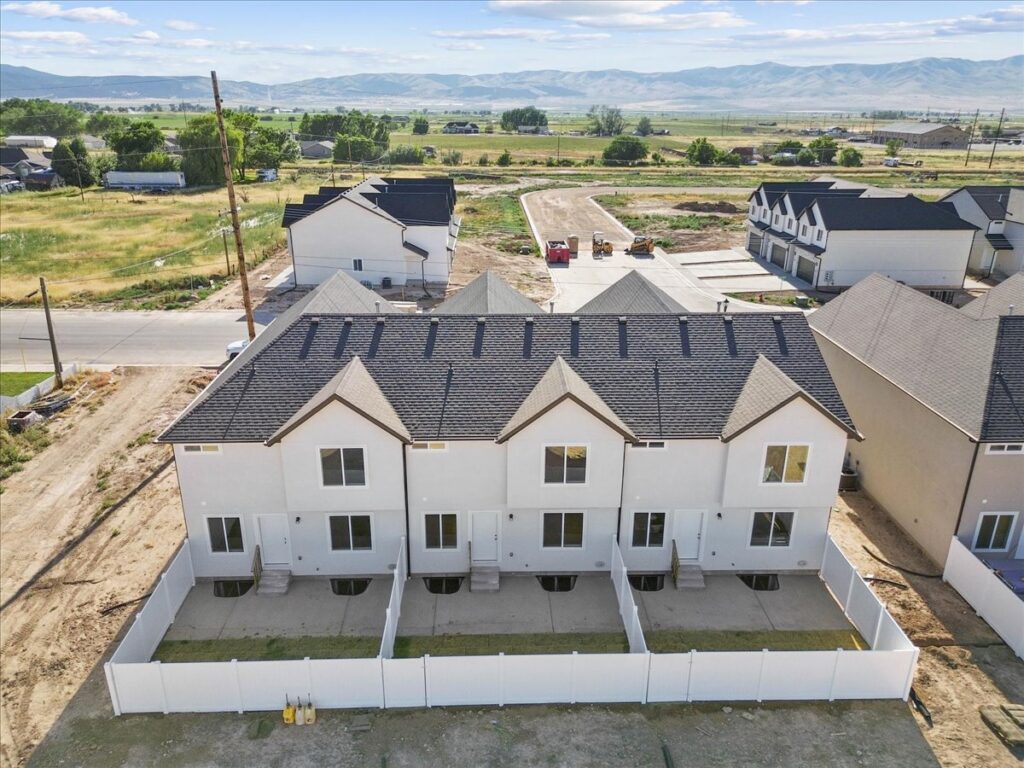
A Nephi property can offer a lower acquisition basis than many Utah County alternatives, but a lower price does not automatically create cash flow. The investment must work after vacancy, management, maintenance, reserves, taxes, insurance, HOA costs, financing, and realistic lease-up assumptions.
Priority Homes’ role is to help you see the property, understand the local product, collect the relevant information, and coordinate the transaction. Your role—together with your lender, inspector, CPA, attorney, insurance adviser, and property manager—is to decide whether the risk-adjusted numbers fit your goals.
75 UnitsLoveless Estates community
3 Scenarios — Conservative, base, upside
Affordability and housing utility can create opportunity—but only property-level evidence proves it.
Nephi sits on Utah’s I-15 corridor and offers a different acquisition environment from many Wasatch Front markets. Zillow reported an average 84648 home value of $456,466 as of June 30, 2026, up 3.3% over the previous year. Redfin reported a $459,775 median sale price for the three months ending May 2026 and an average of 48 days on market. Those figures provide market context; they do not establish the value or future performance of a particular rental.
Potential strength
Nephi can offer a lower entry point than some nearby Utah County ZIP codes. That may improve the rent-to-price relationship, but investors must compare equivalent property types and complete monthly costs.
Properties with garages, private entries, storage, multiple gathering areas, and fenced outdoor space may appeal to households that want more than a conventional apartment.
Direct freeway access broadens the possible tenant pool to local, remote, hybrid, and some Utah County workers. Daily commuters still evaluate fuel, time, and winter travel.
Fewer comparable leases can make rent estimates less precise. One unusual listing should never become the sole basis for your revenue assumption.
A property with acceptable unleveraged income may produce weak cash flow under a specific loan. Test multiple rates, down payments, points, amortizations, and reserve requirements.
Smaller markets can have fewer buyers for a specialized property. Model selling costs, time on market, and a conservative exit price rather than assuming a fast premium resale.
What the current market data does—and does not—tell you. Public data indicates that Nephi values and recent sale prices remain broadly in the mid-$400,000s. It does not tell you achievable rent, future occupancy, repair exposure, investor financing cost, HOA risk, or the correct purchase price for an individual unit. Those require property-specific due diligence.
Direct ownership opportunities and local rental-market intelligence serve different investor needs.
Primary ownership opportunity · Availability varies
The featured Priority Homes investor path is an individually owned townhouse in the 75-unit Loveless Estates community. Current example materials describe approximately 2,579 total square feet, three bedrooms, two gathering areas, an attached two-car garage, modern kitchen finishes, and a fenced yard.
Operational intelligence · Not a blanket offer for sale
Loveless Apartments and Ray’s Apartments provide direct local insight into renter inquiries, bedroom demand, leasing questions, operating realities, and the range of apartment products in Nephi. Ownership availability must be confirmed separately; the apartment hub is primarily a rental-market resource.
Do not imply that every Priority Homes apartment asset is currently for sale. Present Loveless Estates and any specifically available property as the ownership opportunity. Use the apartment communities to demonstrate local operating knowledge and rental-market context unless an apartment asset is formally offered for sale.

Evaluate the resident experience, operating responsibilities, and resale market together.
Loveless Estates is Priority Homes’ flagship 75-unit townhouse community in northern Nephi. The current community guide uses 233 W 815 N #53 as an example listing at $399,900 and approximately 2,579 total square feet. Pricing, address, finishes, layout, completion status, and availability vary, so the investor analysis must begin with the exact unit under consideration.
| Property feature | Potential investment value | What the investor must verify |
|---|---|---|
| Approximately 2,579 sq ft example | More flexibility for families, offices, storage, and longer stays | Exact finished versus unfinished area, legal bedroom count, floor plan, and rent premium supported by comps |
| Three bedrooms | Broad family and work-from-home tenant use | Bedroom dimensions, egress, occupancy rules, and competing three-bedroom inventory |
| Two gathering areas | Space for office, playroom, media room, or multigenerational use | Whether the second area is finished, heated, permitted, and represented accurately |
| Attached two-car garage | Vehicle protection, storage, and stronger winter utility | Parking rules, garage dimensions, tenant use, door condition, and HOA restrictions |
| Fenced yard | Appeal for families, pets, and tenants seeking a home-like rental | Maintenance responsibility, irrigation, pet rules, landscaping standards, and damage exposure |
| HOA-managed exterior | May reduce scattered-site exterior workload | Exact coverage, dues, reserves, insurance boundary, assessments, rental rules, and owner obligations |
| Modern construction and finishes | May reduce near-term turnover objections and deferred maintenance | Inspection, warranties, appliance condition, workmanship, systems, and actual unit finishes |
Featured price is not an investment conclusion. A $399,900 example listing can be below broader Nephi market averages while still producing weak leveraged cash flow—or it can fit a long-hold investor who values newer construction, lower exterior burden, and tenant utility. The complete income and expense model decides.
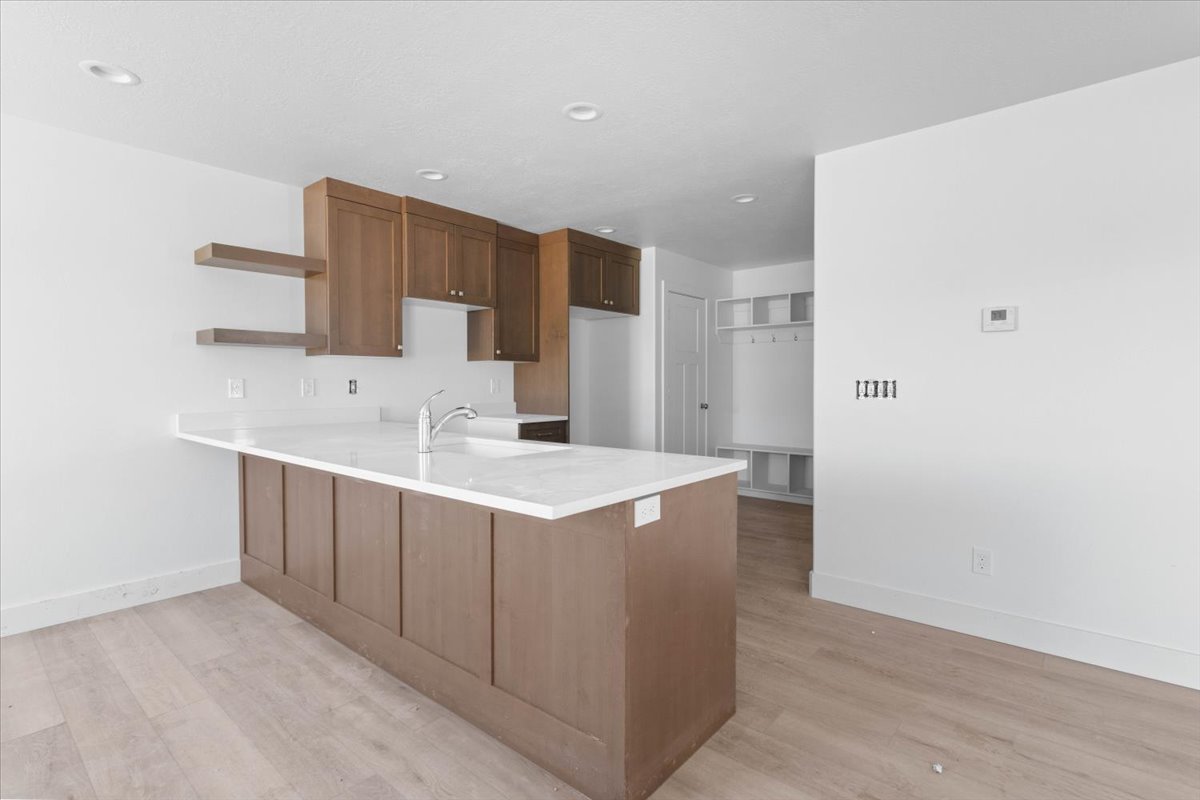
Build the analysis from verifiable documents, not optimistic percentages.
The investment begins with more than the contract price. Include every cost required to acquire, finance, prepare, and stabilize the property.
| Acquisition item | Investor input | Evidence to collect |
|---|---|---|
| Contract purchase price | $________ | Executed purchase agreement and addenda |
| Closing and title costs | $________ | Loan estimate, title quote, settlement estimate |
| Loan fees and points | $________ | Lender term sheet and final loan disclosures |
| Inspection and due diligence | $________ | Inspector, sewer, environmental, survey, appraisal, legal, and HOA review invoices |
| Initial repairs or upgrades | $________ | Written contractor bids with contingency |
| Lease-up and turnover | $________ | Marketing, cleaning, utilities, locks, manager fees, and vacancy period |
| Initial operating reserve | $________ | Investor policy and lender reserve requirement |
| Total acquisition basis | $________ | Sum of all required cash and financed costs |
Use signed leases and executed renewals first. When the property is vacant or the current rent is not market-based, use several recent comparable leases—not one active advertisement. Adjust for bedroom count, finished space, garage, yard, age, utilities, condition, pet policy, lease date, and location.
| Income item | Monthly | Annual | Verification |
|---|---|---|---|
| Base residential rent | $________ | $________ | Lease or supported rent-comp range |
| Other recurring income | $________ | $________ | Lease-authorized pet, storage, parking, or utility income |
| Gross scheduled income | $________ | $________ | Base rent plus recurring income |
| Vacancy and credit loss | ($_______) | ($_______) | Stress-tested assumption based on market and tenant profile |
| Concessions / delinquency | ($_______) | ($_______) | Separate where material; do not hide in vacancy |
| Effective gross income | $________ | $________ | Income reasonably expected after loss assumptions |
| Operating expense | Monthly | Annual | Verification |
|---|---|---|---|
| Property taxes | $________ | $________ | Current tax record plus post-sale reassessment discussion |
| Landlord insurance | $________ | $________ | Written property-specific quote; confirm HOA overlap |
| HOA dues | $________ | $________ | Current HOA statement and governing documents |
| HOA special-assessment reserve | $________ | $________ | Budget, minutes, reserve study, pending projects |
| Property management | $________ | $________ | Signed proposal including leasing and maintenance markups |
| Routine repairs | $________ | $________ | Age, condition, prior history, and conservative reserve |
| Capital expenditure reserve | $________ | $________ | Interior systems and owner-responsible components |
| Owner-paid utilities | $________ | $________ | Utility responsibility in lease and recent bills |
| Landscaping / snow not covered | $________ | $________ | HOA responsibility matrix and service bids |
| Turnover / leasing / cleaning | $________ | $________ | Expected frequency and manager fee schedule |
| Accounting / legal / licensing | $________ | $________ | Ownership structure and compliance needs |
| Total operating expenses | $________ | $________ | Exclude mortgage payments from NOI |
| Metric | Formula | Use | Common error |
|---|---|---|---|
| Net operating income | NOI = Effective Gross Income − Operating Expenses | Measures property income before financing and income taxes | Subtracting mortgage payments inside NOI |
| Cap rate | Cap Rate = Annual NOI ÷ Total Acquisition Basis | Compares unleveraged operating yield | Using gross rent or purchase price alone |
| Pre-tax cash flow | Cash Flow = NOI − Annual Debt Service | Shows cash remaining after operations and loan payments | Ignoring capital reserves or loan balloon risk |
| Cash-on-cash return | CoC = Annual Pre-Tax Cash Flow ÷ Total Cash Invested | Compares annual cash flow with actual investor cash | Counting only the down payment as cash invested |
| Debt-service coverage ratio | DSCR = Annual NOI ÷ Annual Debt Service | Shows how operating income covers scheduled debt service | Assuming every lender defines income and expenses identically |
| Break-even occupancy | Break-Even = (Operating Expenses + Debt Service) ÷ Gross Potential Income | Shows occupancy needed to cover modeled costs | Leaving out reserves, leasing costs, or irregular expenses |
Do not publish one “realistic return” for every investor. A change in rent, rate, down payment, insurance, taxes, HOA costs, management, vacancy, or repairs can materially change the result. Request a property-specific model and show assumptions beside every output.
A deal that survives only the upside case is not conservatively underwritten.
| Assumption | Conservative case | Base case | Upside case |
|---|---|---|---|
| Monthly rent | Lower supported comp | Middle of supported range | Upper supported comp only if features justify it |
| Vacancy and credit loss | 8% planning case | 6% planning case | 4% planning case |
| Management | 10% plus leasing fees | 9% plus leasing fees | 8% only with a written proposal |
| Routine maintenance | Higher reserve | Moderate reserve | Lower reserve supported by inspection and age |
| Capital expenditures | Full conservative reserve | Property-specific reserve | Never zero |
| Loan rate and fees | Higher quote or stress rate | Current written quote | Lower rate only when locked—not forecast |
| Rent growth | 0% | Modest planning assumption | Higher assumption only with evidence |
| Appreciation | 0% | Conservative planning assumption | Never required for current cash flow to work |
| Exit timing | Longer marketing period | Current market-level assumption | Fast sale only as sensitivity—not plan |
| Exit costs | Higher transaction-cost assumption | Full expected selling costs | Do not assume zero selling costs |
Require satisfactory income after all operating expenses, debt service, and reserves. Do not rely on appreciation to repair negative monthly economics.
May accept lower current yield for newer construction or lower operating friction, but must still fund vacancies, repairs, and adverse financing periods.
Prioritize repeatable acquisition criteria, management systems, reserve policy, lender capacity, and concentration limits—not simply door count.
Balances strict timing with disciplined property selection. Tax deferral should not justify buying a property that fails ordinary due diligence.
Needs stronger local inspection, management, reporting, maintenance approval, reserve, and emergency-response systems.
May buy a home now and consider future rental use, but should confirm financing, HOA, insurance, and occupancy restrictions before assuming that plan works.
The property and the loan are two separate investments that must work together.
Investment-property financing varies by borrower, lender, property type, occupancy, entity structure, reserves, documentation, and market conditions. Conventional, DSCR, portfolio, commercial, private, and cash structures can produce very different outcomes even when the purchase price is identical.
Income and credit underwriting
Often appropriate for borrowers with strong personal income documentation, credit, reserves, and available conventional-loan capacity. Confirm down payment, rate, points, reserve rules, appraisal treatment, and rental-income qualification.
Often evaluates the property’s qualifying rent against lender-defined debt service. Rates, points, prepayment penalties, reserve rules, valuation, lease requirements, and DSCR calculations vary substantially by lender.
May provide flexible underwriting for experienced investors or multiple properties. Review recourse, balloon maturity, amortization, covenants, cross-collateralization, and renewal risk.
Removes loan-payment risk but does not remove vacancy, repairs, HOA exposure, insurance, taxes, management, opportunity cost, or resale risk. Compare unleveraged yield with alternative uses of capital.
Never underwrite a future refinance as certainty. A lower future rate, higher future value, or easier future lending standard may not arrive when needed. The initial structure should remain manageable without a forced refinance.
Exterior maintenance can simplify operations, but the governing documents define the real trade.
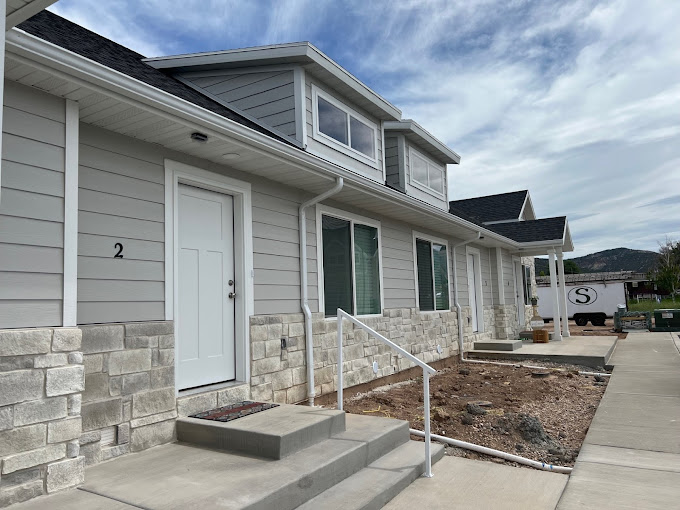
Priority Homes materials state that the Loveless Estates HOA handles exterior maintenance, landscaping, common areas, and community standards, while owners are responsible for interiors. That structure can reduce day-to-day exterior burden. It does not eliminate investor risk, and it should never be summarized from a marketing page alone.
| HOA document or issue | Investor question |
|---|---|
| Declaration, bylaws, and rules | Are rentals allowed, capped, wait-listed, minimum-term restricted, or subject to tenant registration? |
| Current dues statement | What is the exact monthly assessment, what is included, and when can dues increase? |
| Budget and financial statements | Is current income sufficient for operations, insurance, maintenance, and reserves? |
| Reserve information | What major components are HOA responsibility, when are they expected, and how are they funded? |
| Meeting minutes | Are there pending repairs, disputes, insurance changes, delinquency issues, or special assessments? |
| Master insurance policy | Where does HOA coverage stop and the owner’s landlord policy begin? |
| Maintenance matrix | Who pays for roof, siding, windows, doors, fences, irrigation, foundations, decks, and utility lines? |
| Parking and vehicle rules | Can tenants use garages for storage? Are trailers, commercial vehicles, or street parking restricted? |
| Pet and nuisance rules | Do HOA rules conflict with the intended lease, tenant profile, or property-management policy? |
| Litigation and delinquency | Could pending litigation, owner delinquency, or lender eligibility affect financing and resale? |
Obtain and review the current documents before the due-diligence deadline. Website summaries, prior-owner recollections, and old HOA statements are not substitutes for the governing documents, current budget, insurance, minutes, and written resale disclosure package.
Management cost is not optional in the analysis, even when the investor plans to self-manage.
Hands-off operating model
Appropriate for many out-of-area or scaling investors. Compare management percentage, leasing fee, renewal fee, maintenance markup, inspection cadence, reporting, communication, and termination terms.
Can reduce direct fees but requires leasing, screening, accounting, maintenance coordination, legal compliance, documentation, emergency response, and tenant communication.
The owner may control leasing or finances while a local provider handles inspections, maintenance, or emergencies. Put every responsibility and fee in writing.
Tax deferral may support a strategy, but strict compliance begins before the sale closes.
The IRS states that Section 1031 generally applies to exchanges of real property held for investment or productive use in a trade or business for other like-kind real property. Since 2018, Section 1031 generally applies only to real property, not personal or intangible property. Property held primarily for sale does not qualify in the same way as investment property.
Before sale
Coordinate a qualified intermediary, CPA or tax attorney, lender, title company, and real estate professionals before the relinquished property closes.
IRS Form 8824 references the written 45-day identification requirement. Your tax team should control the identification method and deadlines.
The replacement closing generally must occur within the applicable exchange period. Tax-return deadlines can affect the usable timeline.
Have the adviser confirm that both relinquished and replacement property satisfy investment or business-use requirements.
Cash, non-like-kind property, debt relief, related-party issues, basis, and exchange costs can affect recognized and deferred gain.
The IRS uses Form 8824 to report the exchange. Maintain closing, identification, intermediary, basis, and property records.
Tax deferral is not tax elimination, and Priority Homes is not your tax adviser. Confirm the exact deadlines, identification rules, entity consistency, replacement-property use, debt and equity requirements, basis, boot, related-party issues, and filing obligations with qualified professionals.
Move from strategy to documents, underwriting, acquisition, and operation in a disciplined sequence.
Phase 1
Set target cash investment, hold period, income goal, leverage limit, reserve policy, property type, and maximum acceptable risk.
Review only properties that are truly available and collect the address, price, specifications, HOA status, occupancy, and showing access.
Collect rent comps, leases, expenses, taxes, insurance, HOA documents, lender terms, title, disclosures, inspection, and repair bids.
Calculate NOI, cap rate, DSCR, cash flow, cash-on-cash return, break-even occupancy, reserves, and exit sensitivity.
Use appropriate financing, inspection, appraisal, title, HOA, document, and professional-review contingencies with clear deadlines.
Fund reserves, confirm insurance and management, transfer utilities and records, complete lease-up, and monitor actual versus projected results.
Provide your target cash investment, financing preference, desired hold period, minimum income standard, 1031 status, and whether you will self-manage. Priority Homes can then identify current inventory and assemble the available property information.
Walking away is part of successful underwriting.
Income problem
The deal requires a rent materially above recent comparable leases without a clear feature, condition, or service advantage.
Cash flow appears only after removing management, vacancy, repairs, reserves, leasing costs, HOA exposure, or realistic insurance.
The payment is manageable only if rates fall, value rises quickly, or a balloon can be refinanced under future conditions.
The investor cannot obtain current governing documents, financials, insurance, leases, permits, repair history, or clear ownership responsibilities.
There is no reasonable cash buffer for vacancy, repairs, deductibles, HOA assessments, legal issues, or personal financial disruption.
Current operations are unacceptable and the investment thesis depends on a forecasted sale price rather than durable ownership economics.
A 1031 deadline, emotional attachment, sunk inspection cost, or fear of missing out does not improve the property. Keep written acquisition standards before touring and use them when the pressure rises.
Direct answers without guaranteed-return language.
No. Rent, vacancy, tenant performance, expenses, financing, appreciation, tax treatment, and resale results vary. Investors must independently verify every assumption and obtain professional advice.
The principal ownership opportunity is Loveless Estates, Priority Homes’ 75-unit townhouse community in northern Nephi. Example materials describe approximately 2,579 total square feet, three bedrooms, two gathering areas, an attached garage, and a fenced yard. Confirm the exact available unit and specifications.
The current community guide uses 233 W 815 N #53 at $399,900 as an example listing. Pricing and availability can change by unit, finish level, construction status, incentives, and market conditions. Call Kerry Anderson before using that price in an analysis.
Use the current lease when it reflects an arm’s-length market arrangement. Otherwise, build a range from several recent comparable leases adjusted for size, garage, yard, condition, utilities, pet policy, and lease date. The Nephi rent guide is a starting framework, not a property-specific rent opinion.
Divide annual net operating income by the total acquisition basis. NOI is effective gross income minus operating expenses before debt service and income taxes. Include realistic vacancy, management, maintenance, capital reserves, taxes, insurance, HOA, and owner-paid costs.
Divide annual pre-tax cash flow by all cash invested. Include the down payment, closing and loan costs, due diligence, initial repairs, lease-up, and reserves—not only the down payment.
Do not rely on a general answer. Obtain the current declaration, bylaws, rules, resale package, leasing provisions, owner-occupancy requirements, dues, minutes, budget, reserves, insurance, and written confirmation applicable to the exact unit before the contingency expires.
Priority Homes can discuss local operating needs and available management support or connections. Investors should request a written management proposal defining all services, fees, leasing costs, maintenance markups, reporting, inspections, reserves, and termination terms.
A qualifying U.S. real property held for investment or business use may be eligible. Engage a qualified intermediary and tax adviser before selling the relinquished property. The IRS applies strict identification, completion, reporting, and property-use rules.
Call Kerry Anderson with Equity Real Estate at (435) 660-0264 for current property availability and tours. General investor inquiries can go to the Priority Homes office at (435) 623-0897.
Nephi property tours · Loveless Estates · Local investment information
Kerry Anderson — Equity Real Estate: current inventory, property tours, offers, contracts, and local real estate questions. (435) 660-0264.
Priority Homes Office: company information, Loveless Estates, construction context, and general investor inquiries. (435) 623-0897.
Apartment Management: current Priority Homes apartment operations and availability are handled by Chantel Bennett at (435) 660-1332.
Start with an actual available address and a written acquisition standard. Priority Homes can help assemble the local property information; you and your professional team decide whether the conservative case earns the right to proceed.
Visit us at 1451 S Main, Nephi, call 435-623-0897, or send a message and we will get back to you.